Buy hychain.eu ?
We are moving the project
hychain.eu .
Are you interested in purchasing the domain
hychain.eu ?
domain@kv-gmbh.de · 0541-91531010
Buy hychain.eu ?
What is a pronoun?
A pronoun is a word that is used in place of a noun to avoid repetition. It can refer to a person, place, thing, or idea. Pronouns help make sentences less repetitive and more concise. Examples of pronouns include he, she, it, they, we, and you. **
Which pronoun is him?
The pronoun "him" is a third person singular masculine pronoun used to refer to a male person or animal that is the object of a verb or preposition. It is the objective form of the pronoun "he." **


Similar search terms for Pronoun
Top-Angebote
Products related to Pronoun:
-
Shark PowerDetect Ultra-Light Corded Stick Vacuum with Detect Technology, Self-Cleaning Brushroll, Odor Neutralizer TechnologyThe POWERDETECT ultra-light corded stick vacuum combines the most powerful suction of any Rocket stick vacuum † and intelligence across corded stick vacuums.319,99 $*Shipping: 0,00 $Secure redirect to the provider
-
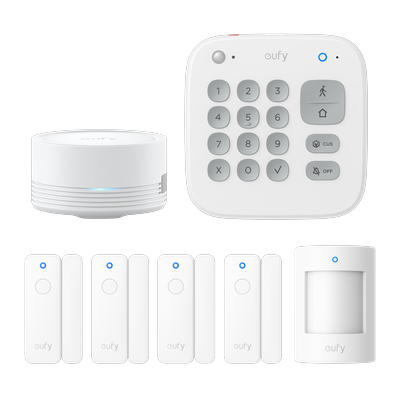
eufy Essential Security Bundle eufy Essential Security BundleYour Home's First Line of Defense: Covers key entry points—front/back doors and main entrances—with reliable detection and stronger long-range connectivity, helping keep your home protected around the clock. Proactive Protection, Instant Alerts³:...299,99 $*Shipping: 0,00 $Secure redirect to the provider


-
Is this a pronoun?
No, the word "this" is not a pronoun. It is a demonstrative adjective or pronoun that is used to indicate something specific or near in distance or time. Pronouns are words that replace nouns in a sentence, such as he, she, it, they, etc. **
-
Which pronoun is reflexive?
A reflexive pronoun is a pronoun that refers back to the subject of the sentence. It ends in -self or -selves, such as "myself," "yourself," "himself," "herself," "itself," "ourselves," "yourselves," and "themselves." Reflexive pronouns are used when the subject and object of a sentence are the same entity, emphasizing that the action is being performed by the subject onto itself. **
-
What is the difference between a personal pronoun and a possessive pronoun?
A personal pronoun is used to replace a noun and refers to a specific person or thing, such as "he," "she," or "they." On the other hand, a possessive pronoun shows ownership or possession, such as "his," "her," or "their." Personal pronouns indicate who is performing the action in a sentence, while possessive pronouns indicate who owns or possesses something. **
-
What is the indirect pronoun?
An indirect pronoun is a pronoun that indicates the recipient of the action in a sentence. It is used to show to whom or for whom an action is being done. Indirect pronouns often come after prepositions such as "to" or "for" and can include words like "me," "you," "him," "her," "us," and "them." These pronouns help clarify the relationship between the subject and the object in a sentence. **

Is "dich" a personal pronoun?
Yes, "dich" is a personal pronoun in German. It is the accusative form of the second person singular pronoun "du," which means "you" in English. "Dich" is used when the pronoun is the direct object of a sentence. **
Which pronoun do you prefer?
As an AI, I do not have personal preferences. I am programmed to use pronouns based on the user's preference. Feel free to let me know which pronouns you would like me to use when addressing you. **
Top-Angebote
Products related to Pronoun:
-
All Categories Goods LED Solar Security Light Dual Motion Sensor Outdoor Floodlight With LED Technology For Energy Efficient Illumination LED Solar Security Light Dual Motion Sensor Outdoor Floodlight With LED Technology For Energy Efficient IlluminationBrighten your outdoor space with the 1 pcs of 22 LED Solar Security Light, designed for maximum visibility and security. Powered by ecofriendly solar energy, this motion sensor floodlight activates when movement is detected, offering both...63,97 $*Shipping: 0,00 $Secure redirect to the provider
-
HARPERCOLLINS Creative Confidence by Tom & David Kelley – Unleashing Your Creative Potential & Innovation MindsetA powerful and inspiring book from the founders of IDEO, the award-winning design firm, on unleashing the creativity that lies within each and every one of us. Too often, companies and individuals assume that creativity and innovation are the domain of the ‘creative types’. But two of the foremost experts in innovation, design and creativity on the planet show us that each and every one of us is creative. In an entertaining and inspiring narrative that draws on countless stories from their work at IDEO, and with many of the world's top companies and design firms, David and Tom Kelley identify the principles and strategies that will allow us to tap into our creative potential in our work lives, and in our personal lives, allow us to think outside the box in terms of how we approach and solve problems. ‘Creative Confidence’ is a book that will help each of us be more productive and successful in our lives and in our careers.4,95 £*Shipping: 1,99 £Secure redirect to the provider
-
Shark PowerDetect Ultra-Light Corded Stick Vacuum with Detect Technology, Self-Cleaning Brushroll, Odor Neutralizer TechnologyThe POWERDETECT ultra-light corded stick vacuum combines the most powerful suction of any Rocket stick vacuum † and intelligence across corded stick vacuums.319,99 $*Shipping: 0,00 $Secure redirect to the provider
-
What is a pronoun?
A pronoun is a word that is used in place of a noun to avoid repetition. It can refer to a person, place, thing, or idea. Pronouns help make sentences less repetitive and more concise. Examples of pronouns include he, she, it, they, we, and you. **
-
Which pronoun is him?
The pronoun "him" is a third person singular masculine pronoun used to refer to a male person or animal that is the object of a verb or preposition. It is the objective form of the pronoun "he." **
-
Is this a pronoun?
No, the word "this" is not a pronoun. It is a demonstrative adjective or pronoun that is used to indicate something specific or near in distance or time. Pronouns are words that replace nouns in a sentence, such as he, she, it, they, etc. **
-
Which pronoun is reflexive?
A reflexive pronoun is a pronoun that refers back to the subject of the sentence. It ends in -self or -selves, such as "myself," "yourself," "himself," "herself," "itself," "ourselves," "yourselves," and "themselves." Reflexive pronouns are used when the subject and object of a sentence are the same entity, emphasizing that the action is being performed by the subject onto itself. **
Similar search terms for Pronoun
-
eufy Essential Security Bundle eufy Essential Security BundleYour Home's First Line of Defense: Covers key entry points—front/back doors and main entrances—with reliable detection and stronger long-range connectivity, helping keep your home protected around the clock. Proactive Protection, Instant Alerts³:...299,99 $*Shipping: 0,00 $Secure redirect to the provider
-
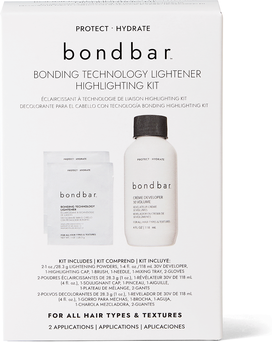
Bondbar Bonding Technology Lightener Highlighting Kit eachbondbar Bonding Technology Lightener Highlighting Kit provides the current bondbar Bonding Technology Lightener and 30v Creme Developer, designed to protect and hydrate hair bonds during the lightening process. Compared to traditional lighteners,...22,89 $*Shipping: 0,00 $Secure redirect to the provider
-
Sleepclimate Down Alternative Blanket With 37.5 TechnologyExperience the ultimate Sleepclimate down alternative blanket with 37.5 technology. 37.5 Technology is a natural technology that incorporates sustainability throughout the product lifecycle.76,49 $*Shipping: 0,00 $Secure redirect to the provider
-
What is the difference between a personal pronoun and a possessive pronoun?
A personal pronoun is used to replace a noun and refers to a specific person or thing, such as "he," "she," or "they." On the other hand, a possessive pronoun shows ownership or possession, such as "his," "her," or "their." Personal pronouns indicate who is performing the action in a sentence, while possessive pronouns indicate who owns or possesses something. **
-
What is the indirect pronoun?
An indirect pronoun is a pronoun that indicates the recipient of the action in a sentence. It is used to show to whom or for whom an action is being done. Indirect pronouns often come after prepositions such as "to" or "for" and can include words like "me," "you," "him," "her," "us," and "them." These pronouns help clarify the relationship between the subject and the object in a sentence. **
-
Is "dich" a personal pronoun?
Yes, "dich" is a personal pronoun in German. It is the accusative form of the second person singular pronoun "du," which means "you" in English. "Dich" is used when the pronoun is the direct object of a sentence. **
-
Which pronoun do you prefer?
As an AI, I do not have personal preferences. I am programmed to use pronouns based on the user's preference. Feel free to let me know which pronouns you would like me to use when addressing you. **
* All prices are inclusive of VAT and, if applicable, plus shipping costs. The offer information is based on the details provided by the respective shop and is updated through automated processes. Real-time updates do not occur, so deviations can occur in individual cases. ** Note: Parts of this content were created by AI.